
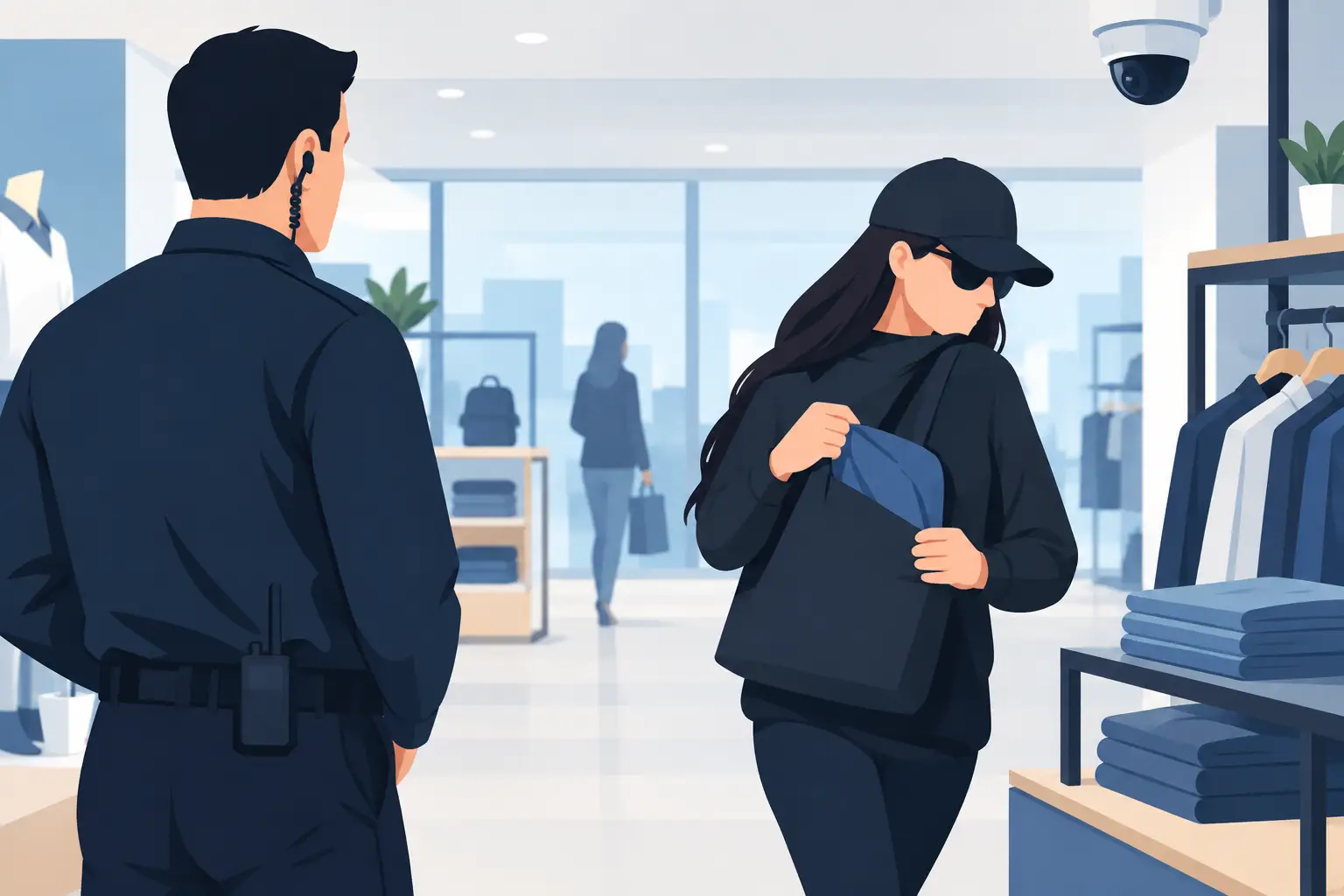
A useful retail theft prevention example is not a guard standing at the door for an entire shift. It is a coordinated response where trained security staff, store colleagues and managers recognise risk early, protect customers and stock, and record incidents properly. For retail security officers, the objective is to reduce loss without creating unnecessary confrontation or making genuine customers feel unwelcome.
Retail environments are busy, varied and public-facing. A convenience shop, shopping centre unit, pharmacy, off-licence and large supermarket all present different risks. The strongest prevention plans reflect the site, its layout, trading hours, local incident history and the authority available to the security team.
A retail theft prevention example in practice
Consider a city-centre retailer experiencing repeated theft of high-value cosmetics, alcohol and small electrical items during the late afternoon. The initial response had been reactive: staff noticed missing products after the person had left, while the security officer was repeatedly called away to deal with alarms, deliveries and customer queries.
The site manager and security supervisor reviewed when and where loss was happening. They found that incidents were most common between 4 pm and 7 pm, when shelves were being replenished, the entrance was crowded and one aisle had limited visibility from the till area. The solution was not simply to add more cameras or place every product behind a counter. Both can help, but both affect cost, service and sales.
Instead, the team introduced a practical prevention plan. High-risk stock was moved closer to attended areas, with a smaller number of premium items secured in display cabinets. The security officer completed visible but varied patrols through the relevant department, avoiding a predictable route. Floor staff were briefed to acknowledge customers promptly and report behaviour or circumstances rather than making assumptions about individuals.
At the entrance, the officer used professional, customer-focused engagement: a greeting, clear visibility and awareness of activity near exit points. When a concern developed, the officer observed from a safe distance, maintained communication with the duty manager and used CCTV where available to confirm the sequence of events. Any intervention followed the employer’s policy, training and legal guidance.
Within several weeks, the retailer had better incident information, fewer repeat opportunities in the same area and a more confident team. The key result was not only a reduction in loss. Colleagues knew what to report, the officer had a clearer role, and customers continued to receive a normal retail experience.
Why visible security works, up to a point
A professional, clearly identifiable security presence can deter opportunistic theft. It also reassures staff who may be concerned about antisocial behaviour, aggressive incidents or lone working. Visibility matters most when it is active: purposeful patrols, alert observation, proper access control and constructive contact with the store team.
However, high visibility is not a complete strategy. An officer positioned permanently at one entrance may leave vulnerable departments unobserved. A heavy-handed approach can escalate a low-level situation and cause reputational damage. Good retail security is measured, lawful and proportionate.
For this reason, officers should understand the difference between suspicious behaviour and confirmed evidence. Looking nervous, carrying a large bag or visiting a store frequently is not proof of theft. Security decisions should be based on observed actions, available CCTV, stock-control processes and site procedures, not stereotypes or assumptions.
Build prevention around the retail team’s routine
Security officers cannot prevent retail theft in isolation. Store colleagues often see the earliest indicators: damaged packaging, concealed items in changing rooms, unattended delivery doors, repeated attempts to distract till staff or groups moving through blind spots. They need a straightforward way to communicate concerns without disrupting service.
A short shift briefing is often more effective than a long policy document. It can cover the current high-risk products, known pressure points, radio call signs, emergency arrangements and who makes the final decision on an intervention. If staff know that reporting is welcomed and acted on, they are more likely to share useful information promptly.
The officer should also understand the operational rhythm of the store. Deliveries, stock takes, refunds, opening and closing routines, promotional events and staff breaks can all create opportunities for loss. A mobile patrol officer covering several locations needs the same awareness, even where their visits are brief.
Use the physical environment well
Retail design can either support or frustrate prevention. Sightlines should be considered around displays, queue barriers, changing rooms, emergency exits and self-service areas. Mirrors, CCTV signage, sensible product placement and adequate lighting can all support observation, but they do not replace trained people.
A common mistake is to secure every high-value product without reviewing how customers buy it. Excessive barriers may lead to poor service, abandoned purchases and more pressure on staff. The better approach is to identify the products and locations driving actual loss, then use controls proportionately.
Make CCTV part of a decision, not the whole decision
CCTV operators and on-site officers can be highly effective when images are clear, cameras cover the relevant area and communications are disciplined. A camera system with blind spots, poor positioning or nobody monitoring live activity will have limited preventive value.
Where CCTV is used, officers should follow the site’s procedures for viewing, preserving and reporting footage. Accurate times, locations, descriptions and incident references make footage more useful for internal investigation and, where appropriate, for Gardaí or police enquiries. Do not rely on memory alone after a busy shift.
Intervention and safety come first
Retail theft can quickly become a safety incident, particularly where a person becomes aggressive, threatens staff or attempts to leave through a restricted area. Security staff should work within their training, assignment instructions and employer policy. The priority is protecting people, not recovering every item.
A calm approach often produces the best outcome. Maintain personal space, avoid blocking exits unless authorised and safe to do so, call for support early, and keep colleagues away from a developing confrontation. If there is a risk of violence, weapons, serious disorder or immediate danger, follow the emergency procedure and contact the relevant emergency services.
Security teams should be especially clear on escalation. In the Republic of Ireland, retail sites may require contact with An Garda Síochána; in Northern Ireland, incidents may require the PSNI. Employers should set out local reporting arrangements and ensure officers know whom to contact after hours. Licensed personnel must also comply with the requirements of their relevant PSA or SIA licence role, as well as site-specific instructions.
Reporting turns incidents into prevention
A concise, factual report is one of the most valuable tools in retail loss prevention. It helps a manager identify repeat patterns, supports fair decisions and gives the next shift meaningful information. It also protects the officer by showing that actions were reasonable and properly recorded.
A quality report states what was seen, heard and done. It records dates, times, locations, descriptions, relevant CCTV references, colleagues present, stock details where known and the action taken. It should avoid speculation, emotive language and labels that cannot be supported by fact.
For example, write that an individual selected two boxed items, placed them inside a bag, passed all points of payment and left the premises. Do not write that the person was “obviously a thief”. Precision matters, particularly if the report is reviewed by senior management, a client, the Gardaí, police or legal representatives.
Managers should review reports regularly rather than filing them away. Three incidents involving the same product, exit route and time period may justify a change in deployment, merchandising, staffing or CCTV coverage. One isolated incident may call for a different response. Prevention improves when evidence shapes decisions.
What employers should look for in retail security staff
Retail clients need more than a visible licence badge. They need officers who can communicate confidently, write clear reports, de-escalate conflict and maintain professional standards through long, customer-facing shifts. Experience with CCTV, loss prevention, access control, incident management and mobile patrols can be particularly valuable depending on the assignment.
For candidates, retail work can build strong transferable security skills. It offers experience in observation, customer service, emergency response and working as part of a wider site team. When applying for a retail security role, highlight your PSA or SIA licence status, relevant training, report-writing capability, availability and any experience of conflict management or CCTV operations.
Security Jobs Ireland helps employers reach security-focused candidates and gives licensed professionals a direct route to relevant vacancies without a recruitment middleman. The right match is not just about filling a shift. It is about placing capable people in environments where clear procedures and professional judgement are valued.
The best retail theft prevention plan gives officers the information, authority and support to act early and calmly. When a team notices patterns, communicates clearly and puts safety ahead of recovery, loss prevention becomes part of good retail operations rather than a last-minute response.