
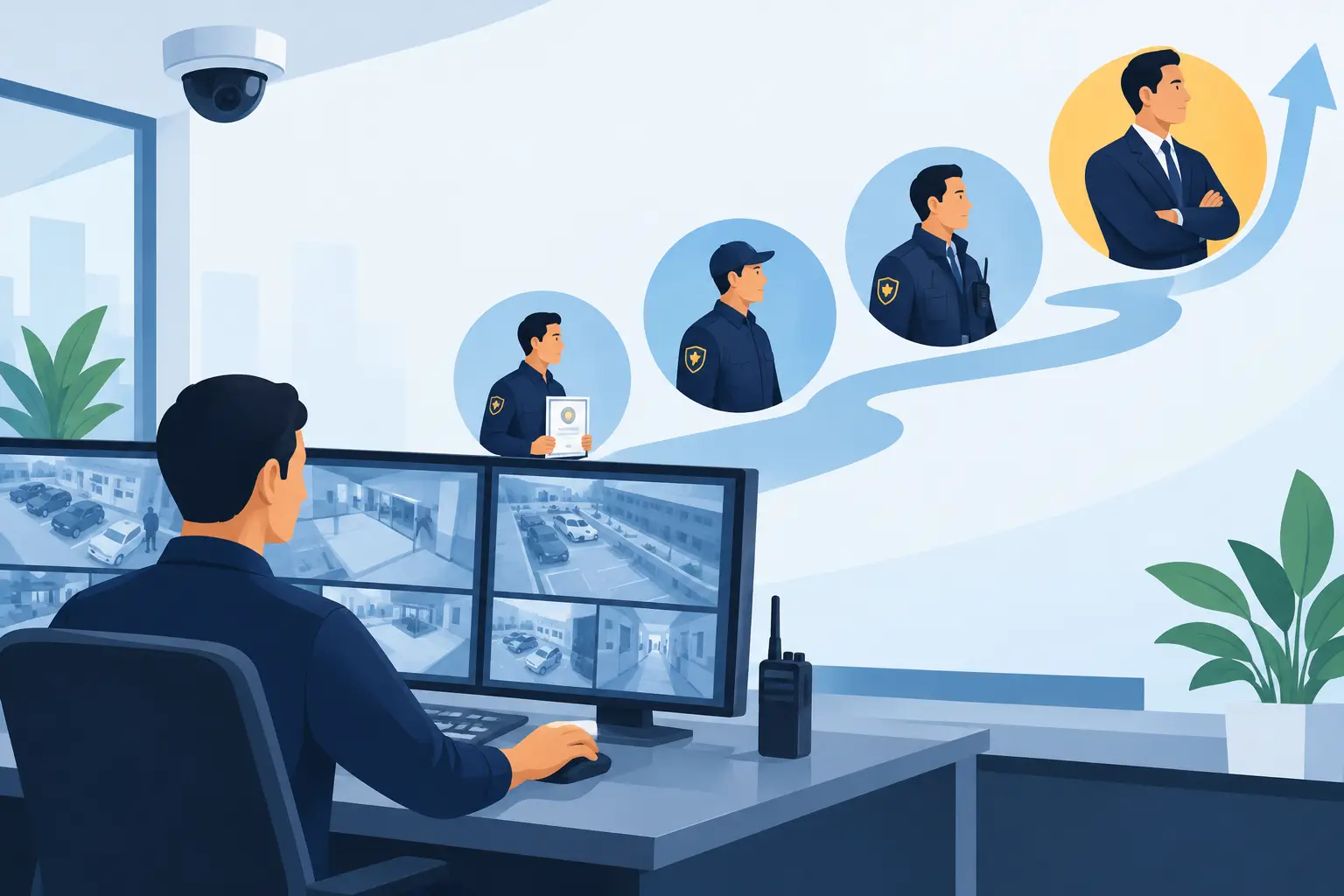
A control room may look calm from the outside, but the work depends on judgement, concentration and accurate reporting. A strong CCTV operator career path starts with the right licence and develops through real operational experience: recognising risk, following procedure, preserving evidence and communicating clearly when an incident unfolds.
For people who want a security role with responsibility but without working solely on a front gate or patrol route, CCTV monitoring can offer a credible long-term route. The progression is not automatic, however. Employers look for licensed professionals who can be trusted with sensitive information, live incidents and site-specific procedures.
What CCTV operators actually do
CCTV operators monitor camera systems to protect people, premises, stock and assets. Depending on the site, that can mean watching a retail estate, logistics depot, transport location, corporate building, residential development, healthcare setting or public space.
The role is more than watching screens. Operators must identify unusual behaviour, track relevant activity across cameras, log events accurately and escalate concerns through the correct channels. They may work alongside security officers, mobile patrols, site management, emergency services and control room colleagues.
A typical shift can include checking cameras and communications at handover, monitoring live footage, responding to alarms, completing incident reports and retrieving footage in line with company procedure. On some contracts, operators also answer intercoms, manage access-control alerts or provide welfare support to lone workers.
This variety is one reason the role suits people who are observant and calm under pressure. It also means each vacancy should be read carefully. A shopping-centre control room and a remote monitoring centre may use similar equipment, but the pace, risks and shift pattern can be very different.
CCTV operator career path: start with licensing
Your first practical step is understanding the licensing requirement for the jurisdiction where you will work. In the Republic of Ireland, roles involving CCTV monitoring generally require the relevant PSA licence. In Northern Ireland, public space surveillance work may require an SIA CCTV licence. Requirements can depend on the duties, setting and employer, so check the job advert and confirm expectations before paying for training.
Approved training is the usual route for new entrants. Choose a course that is recognised for the licence you need, then allow time for the application process, identity checks and vetting. Do not assume that a general security qualification automatically covers CCTV work.
Employers also value evidence that your licence is current and that you are eligible to work the stated shift pattern. Keep digital and paper copies of your qualification, licence details and identification organised. It makes applications quicker and helps employers assess suitability without unnecessary delays.
If you already hold a guarding, door supervision or security officer licence, CCTV can be a useful specialism. Your experience with incident reporting, access control and customer interaction may transfer well, but the CCTV licence and relevant training still need to match the position.
Build the skills employers rely on
Technical confidence matters, but it is only part of the job. Most employers can train a new operator on their specific cameras, alarm platform and reporting system. What is harder to teach quickly is sound professional judgement.
The strongest candidates usually show four qualities:
- sustained attention, including the ability to stay alert during quieter periods;
- concise communication by radio, telephone and written report;
- an understanding of confidentiality, data protection and evidence handling; and
- calm decision-making when an alarm, safety concern or crime report requires immediate action.
Written reporting deserves particular attention. A useful incident report records facts, timings, locations, people involved and actions taken. It does not make assumptions or include unnecessary opinion. If footage may later be used by management, insurers or Gardaí or police, accurate notes can be as valuable as the recording itself.
Customer service is also relevant. Many operators speak with visitors, tenants, delivery drivers, store staff or contractors. Professional communication can prevent a minor issue from becoming a difficult incident, while still maintaining site rules and security boundaries.
Get experience that moves you forward
Your first CCTV role does not have to be a large central control room. Entry-level opportunities can appear in retail security, gatehouse operations, concierge security, remote monitoring and mixed security officer/CCTV positions. A blended role can be a practical way to gain monitoring experience while building confidence in site operations.
There is a trade-off. A combined role may offer broader exposure but less dedicated time on surveillance systems. A full-time CCTV post can build specialist experience faster, though vacancies may ask for previous control room work. Choose the role that gives you a realistic next step rather than waiting indefinitely for a perfect title.
Once in post, look for experience that demonstrates responsibility. This might include handling alarm activations, supporting investigations, completing detailed reports, conducting shift handovers or helping newer staff understand local procedures. Keep a private record of the systems you have used and the duties you have performed, without sharing confidential site information.
That record will strengthen your CV. Instead of writing only “monitored CCTV”, describe the scale and nature of your work: monitored multiple camera feeds, responded to access-control alarms, maintained incident logs, liaised with patrol teams, or preserved footage following reported incidents.
Progression beyond the control room
A CCTV position can lead in several directions. The right route depends on whether you prefer operational leadership, technical systems or broader site security.
An experienced operator may progress to senior CCTV operator, control room supervisor or shift leader. These posts typically add responsibility for task allocation, quality checking reports, supporting escalations and ensuring procedures are followed. They suit people who remain composed while coordinating others.
Another route is into security supervision or security management. Experience from a control room gives a useful overview of incident patterns, site vulnerabilities and response performance. To move up, you will need strong people management, client communication and an understanding of risk assessments and contract requirements.
Some professionals move towards security systems roles, particularly if they enjoy the technical side of cameras, access control and alarm integration. This path may require additional manufacturer training or formal technical qualifications. It is a different type of work from monitoring, with more emphasis on installation, fault finding and system configuration.
There is also a route into investigations, loss prevention and corporate security. These roles often value people who understand footage review, evidence continuity and incident documentation. Competition can be higher, so a record of reliable, high-quality operational work is essential.
Make your applications more credible
Security employers need to know quickly whether you meet the core requirements. Put your current PSA or SIA licence information near the top of your CV, alongside your location, right-to-work status where appropriate and availability for days, nights or weekend shifts.
Tailor your profile to the role. For a remote monitoring vacancy, emphasise alarm response, lone-worker welfare checks and communication skills. For a retail or corporate site, highlight incident reporting, access control and customer-facing professionalism. Avoid generic claims such as “hardworking” unless your experience demonstrates what that means in practice.
Before applying, check the location, travel time and shift arrangement. Control room work commonly includes 12-hour shifts, nights, weekends and public holidays. A better rate may not suit you if the commute is unreliable after a night shift. Equally, a nearby role with stable hours can be a stronger career foundation than a higher-paid temporary contract.
Security Jobs Ireland allows licensed professionals and licence-track candidates to search security roles by location and category, create a profile and apply directly to employers. Keep your profile current, set relevant job alerts and make your licence status clear so suitable employers can identify you.
Protect your professional reputation
CCTV work is built on trust. Never discuss footage, incidents or site routines outside authorised channels. Follow data-protection rules, use systems only for legitimate work purposes and escalate concerns rather than trying to resolve situations beyond your authority.
Reliability matters just as much. Arrive prepared for handover, read updates, ask when a procedure is unclear and report equipment faults promptly. These habits are noticed by supervisors and can make the difference when a senior operator or supervisory opportunity becomes available.
Your next move does not need to be dramatic. A current licence, dependable control room record and well-presented application can turn a first monitoring post into a career with genuine responsibility and room to grow.