
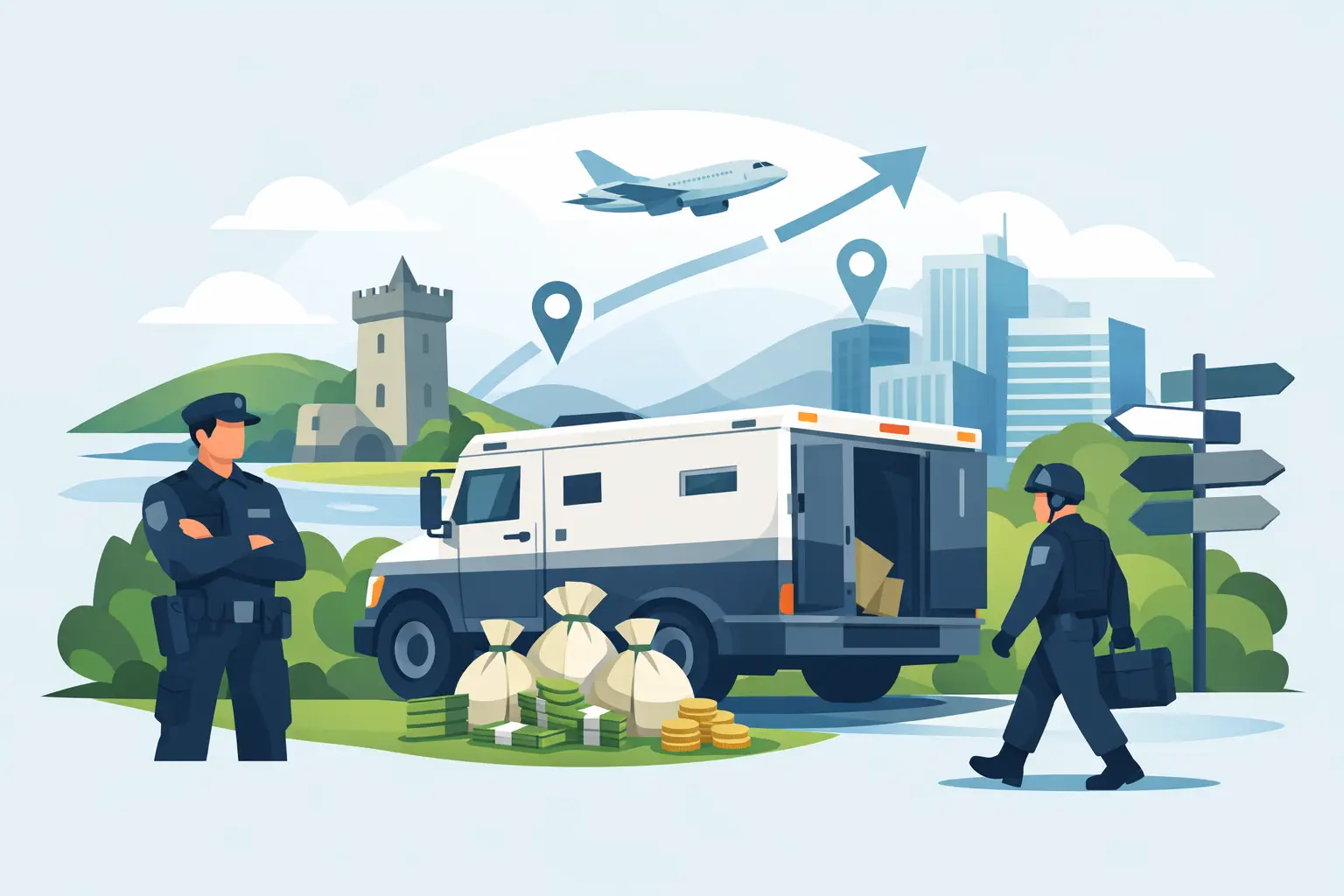
Cash in transit work carries a level of responsibility that is clear from the first shift. You may be trusted with high-value consignments, required to follow strict operating procedures and expected to remain professional under pressure. For candidates searching for cash in transit jobs Ireland, that responsibility can also lead to stable work, structured training and a credible route into specialist security employment.
This is not a role where a strong CV alone secures an interview. Employers need people who can meet licensing, vetting, driving and reliability requirements, then demonstrate sound judgement without treating the work casually. Knowing what the job involves before you apply will help you target suitable vacancies and present yourself properly.
What cash in transit work involves
Cash in transit, often shortened to CIT, covers the secure movement of cash, valuables and sensitive consignments between businesses, financial institutions, retail sites and processing locations. Depending on the employer and contract, a team may collect and deliver sealed cash containers, service cash points, handle valuable stock or support secure logistics operations.
The work is procedure-led. Routes, collections, vehicle checks, handovers, communications and incident reporting are all managed according to company policy. That can make the role attractive to security professionals who value clear standards and know that consistency matters.
A typical day may involve early starts, planned routes, working with a partner or crew, dealing professionally with site contacts and completing accurate documentation. The pace can vary significantly. A scheduled collection run for retail premises is different from a high-volume operation serving a city centre, and both differ from a role focused on secure processing facilities.
There is a physical side too. Candidates should be comfortable getting in and out of vehicles, handling equipment safely and working outdoors in changeable Irish weather. It is not necessarily heavy manual labour, but stamina and practical awareness are useful.
Cash in transit jobs in Ireland: key requirements
The exact criteria vary by employer, location and contract. However, cash in transit employers generally look for candidates who can show that they are trustworthy, dependable and able to work within a tightly controlled security environment.
Licensing and legal eligibility
In the Republic of Ireland, employers will usually state the Private Security Authority licence required for the position. Read the vacancy carefully rather than assuming that any security licence will be accepted. A current PSA licence relevant to the duties is commonly essential, while some employers may consider applicants who are licence-track and can meet the requirement before starting.
For roles in Northern Ireland, the employer may require a valid SIA licence appropriate to the work. Requirements can differ across employers and contracts, so candidates should always check the stated licence type, expiry date expectations and any conditions relating to deployment.
A licence is only one part of suitability. Keep your details current, make sure your identity documents are in order and be prepared to provide accurate employment history. Gaps are not automatically a barrier, but unexplained or inconsistent information can delay vetting.
Vetting, references and financial checks
CIT employers handle work where trust is central. Pre-employment screening is therefore likely to be thorough and can include identity checks, right-to-work checks, employment references and criminal record vetting where appropriate. Some employers may also have additional screening standards because of the nature of the assets and clients involved.
Be open from the start. If there is something in your history that requires explanation, answer honestly and provide context when asked. Attempting to conceal information is far more damaging than a straightforward conversation during a formal vetting process.
Driving and practical credentials
Many operational cash in transit roles require a full, clean driving licence, often with a minimum period of driving experience. Manual driving capability may matter where fleet vehicles are not automatic. Employers may also specify age requirements for insurance purposes, though these should be set out in the job advert.
It is worth highlighting practical credentials on your CV: driving categories, safe vehicle experience, shift availability, first aid training and previous work in controlled environments. Do not exaggerate them. Security employers value accuracy because they need to place the right person in the right role quickly.
The qualities employers notice
Professionalism in cash in transit work is often quiet. It means arriving ready for duty, following the process every time, communicating clearly with colleagues and recognising when an issue needs to be escalated. Employers are looking for people who remain calm, alert and respectful, even when a route is busy or a handover does not go exactly to plan.
Customer service also has a place in the role. You may deal with shop managers, facilities teams, finance staff and members of the public. A courteous manner helps, but discretion is equally important. The strongest candidates understand that they represent both the security provider and its client.
Previous experience can help, particularly in security guarding, mobile patrols, logistics, retail loss prevention, armed forces, emergency services or customer-facing operational work. It is not always essential, however. A well-vetted candidate with the right licence, driving record and attitude may be considered for an entry-level position where training is provided.
How to make your application stronger
A generic security CV can undersell you. Adjust it for the position by placing your licence details and expiry date near the top, followed by your location, driving status and availability. If you can work early mornings, evenings, weekends or rotating shifts, say so plainly.
Use your work history to show dependable behaviour rather than simply listing duties. For example, mention experience of following site procedures, completing reports, maintaining radio communication, conducting safe handovers or working as part of a patrol team. These are relevant indicators of how you are likely to perform in a CIT environment.
Keep the application factual. A short profile that says you are a PSA-licensed officer with a full driving licence, verified shift flexibility and experience in procedural security work is more useful than broad claims about being highly motivated. Employers need information they can act on.
Before submitting, check that your phone number, email address, licence details and dates are correct. Missed calls and outdated paperwork can slow down a direct-hire process, particularly when an employer needs to fill a roster quickly.
Pay, shifts and the trade-offs to consider
Pay for cash in transit positions depends on location, licence requirements, experience, shift pattern and the level of responsibility. Some roles offer a set hourly rate, while others may include overtime, shift premiums, weekend rates or allowances. Look beyond the headline figure and ask how contracted hours, overtime availability and holiday entitlement are handled.
Shift patterns are one of the biggest practical considerations. Early starts can suit candidates who prefer daytime finishes, while rotating rosters may offer more varied hours but require flexibility around family commitments and travel. A role with a higher hourly rate is not automatically the best option if the commute is long or the guaranteed hours do not suit your circumstances.
You should also consider the employer’s training approach, vehicle arrangements, probation process and opportunities to move into supervisory, control room, logistics or operational management roles. Cash in transit can be a long-term specialism, but it can also build experience for wider security careers.
Finding the right vacancy
Search by county, city and work pattern, then read every job card closely. Confirm whether the role is based at a depot, involves regional travel or begins from a specific operational hub. Check the licence requirement, whether a driving licence is mandatory, the advertised pay, the shift schedule and the closing date before applying.
Security Jobs Ireland is built for this kind of focused search. Creating a complete candidate profile, uploading an up-to-date CV and listing your PSA or SIA information makes it easier to apply directly to relevant employers without a recruitment agency acting as the middleman.
Set alerts for cash in transit, secure logistics and mobile security roles if you are open to related work. Employers do not always use identical job titles, and a vacancy described as secure transport or valuables operations may match your experience.
The best next step is a practical one: get your licence information, driving details and references ready before the right vacancy appears. When an employer sees a candidate who is properly prepared, clearly qualified and ready to work to procedure, that application stands out for the right reasons.