
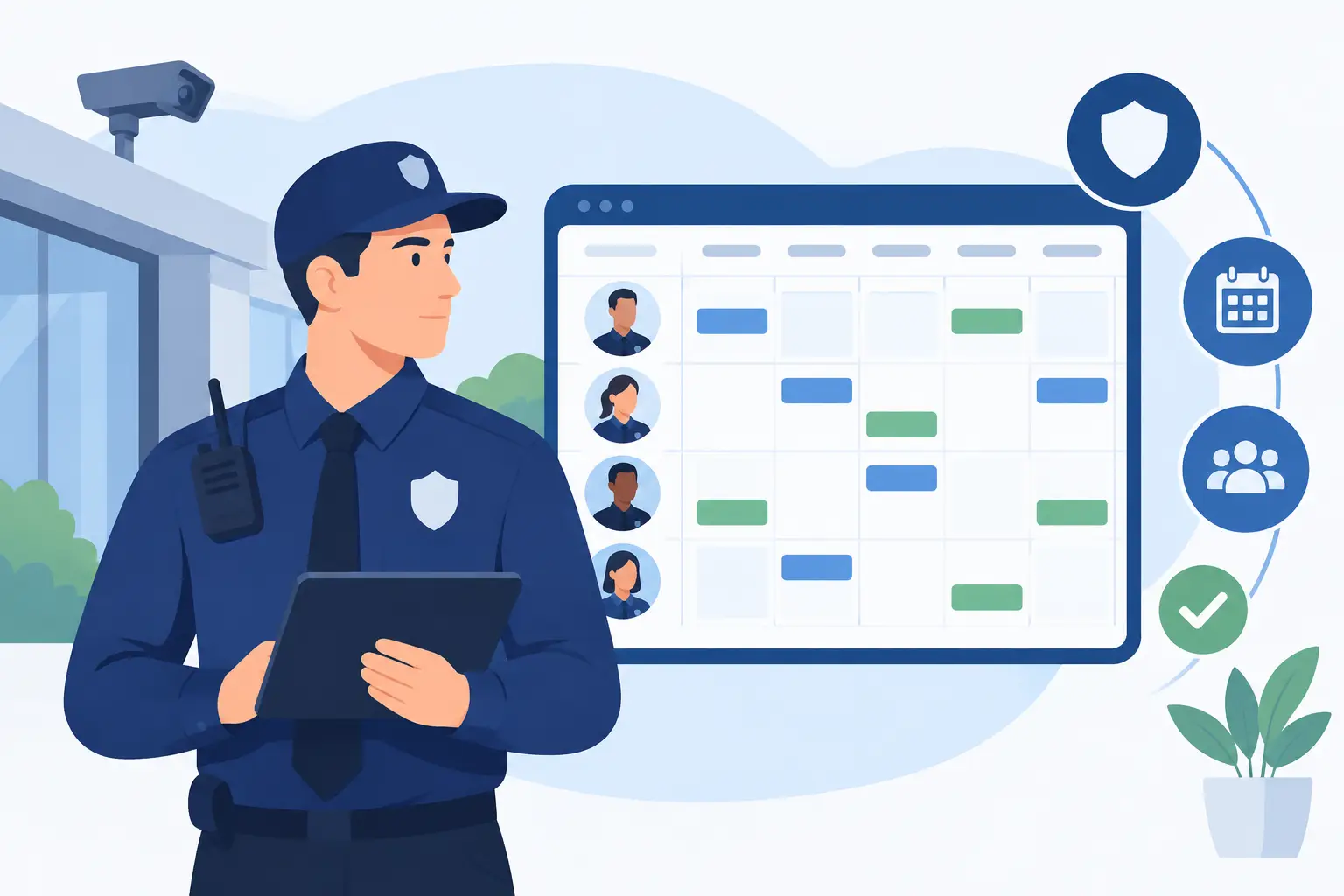
A vacant control-room post at 2am is not an administrative issue. It is a live operational risk. Security rostering software gives security employers a clearer way to assign licensed people, confirm cover and respond when a shift changes at short notice – without relying on scattered texts, paper rotas or an overstretched spreadsheet.
For security firms, facilities teams and site managers across Ireland and Northern Ireland, the right system is about more than filling boxes on a weekly rota. It should support safer staffing decisions, fairer allocation of work and a more professional experience for officers.
What security rostering software should solve
A security rota has more moving parts than a standard staff schedule. Posts may require a specific PSA or SIA licence, site induction, driving entitlement, CCTV experience, first-aid certification or clearance level. Shift patterns can include nights, weekends, relief cover, mobile patrols and last-minute event work. A system that merely shows names against dates will not manage those realities well.
Good security rostering software brings the operational picture into one place. Managers can see who is available, who is qualified for a particular assignment, where double-booking may occur and which posts still need cover. Officers receive their shifts clearly, with the location, start time, instructions and contact details they need before they arrive on site.
This matters just as much for retention as it does for compliance. Officers are more likely to remain with an employer that communicates properly, pays attention to availability and avoids avoidable changes to their working week. A rota sent late, altered without notice or built around the same small group of people creates frustration quickly.
Start with the risks in your current rota process
Before comparing systems, identify where the present process is letting the operation down. The right choice depends on the size of your workforce, the number of locations you cover and the complexity of each contract.
A small guarding company with a handful of regular static sites may need straightforward scheduling, availability tracking and reliable shift notifications. A larger provider working across retail, construction, healthcare and events may need location-specific rules, mobile check-in, client reporting and payroll exports. There is no value in paying for advanced functions that your supervisors will not use, but basic software can become a false economy if it cannot cope with growth.
Look closely at recurring issues. Are supervisors spending evenings phoning officers for cover? Are licence expiry dates held in separate files? Do payroll queries arise because timesheets and rotas do not match? Are officers arriving without current site instructions? These are practical problems a rostering platform should reduce.
Licence and qualification visibility
For a security employer, qualification records cannot be an afterthought. The roster should make it easy to identify whether the person assigned holds the appropriate licence and any role-specific credentials required for the post.
This does not remove an employer’s duty to carry out proper checks. Licence status, vetting, training records and client requirements still need active management. However, visible alerts for approaching expiry dates and missing documentation help managers act before a person is placed incorrectly or removed from a shift at the last minute.
For organisations operating in both jurisdictions, be precise about requirements. PSA licensing applies in the Republic of Ireland, while SIA licensing is relevant in Northern Ireland and Great Britain. A system should allow you to record the right information for each role and location rather than treating all licences as interchangeable.
Availability that reflects real life
Security professionals often work varied hours, particularly relief officers, door supervisors and event staff. Availability tools can prevent managers from offering shifts to people who have already said they cannot work, are on leave or are assigned elsewhere.
That said, technology should not turn availability into an expectation that officers are always on call. Clear policies still matter. Set cut-off points for rota publication, define how urgent cover requests are handled and make sure staff know who to contact if they cannot attend a shift. The system supports the process; it does not replace fair management.
Features worth prioritising
When reviewing providers, focus on the features that improve actual deployment rather than the longest specification sheet. The most useful options commonly include:
- Shift planning by site, contract, role and required skill or licence.
- Availability, leave and absence records that managers can check before assigning work.
- Immediate notifications when a shift is published, changed or cancelled.
- Mobile access for officers to view rotas, instructions and contact details.
- Time and attendance tools, such as clock-in records or location-aware check-in where appropriate.
- Alerts for expiring licences, training, documents and compliance tasks.
- Reporting that compares planned hours, worked hours, unfilled shifts and overtime.
- Exports or integrations that reduce duplicate entry between rostering, payroll and invoicing.
Not every operation needs every feature. Mobile check-in can be valuable for dispersed mobile patrols or multi-site contracts, for example, but it needs to be used proportionately and explained clearly to staff. If location data is collected, employers should have a legitimate purpose, clear retention rules and an approach that meets their data protection responsibilities.
Build rotas around sites, not just people
The strongest rostering practices begin with accurate site information. Each assignment should contain the details an officer needs to work safely and professionally: the exact location, shift times, access arrangements, dress code, reporting line, key duties, escalation procedures and any current risks or client instructions.
This is especially important where officers cover multiple contracts. A security professional who knows a shopping centre, construction gatehouse and corporate reception all require different procedures can prepare properly when instructions are current and easy to find.
Managers should also build realistic relief capacity. A rota that is fully staffed on paper but has no plan for sickness, transport disruption or a no-show is fragile. Keep a suitable pool of trained relief staff, and avoid relying repeatedly on excessive overtime from the same officers. Tired staff and rushed handovers are not good for service quality or welfare.
Make payroll and communication part of the decision
Rostering is closely tied to pay. If scheduled hours, actual attendance and approved overtime sit in separate systems, the office team spends time chasing corrections and officers lose confidence when wages are wrong. Ask potential providers how timesheet approvals work, what data can be exported and whether different pay rates can be handled for nights, weekends, public holidays or specific contracts.
Communication matters equally. Officers should not have to search through old WhatsApp messages to confirm where they are meant to be. A central record of shift changes creates accountability and gives supervisors a clearer audit trail when a query arises.
However, avoid making the system the only channel. For serious last-minute issues, such as an officer failing to arrive at a critical site, direct contact remains essential. Software can flag the gap and record the action taken, but a duty manager still needs to make the right call.
Introduce the system properly
Even excellent software will fail if implementation is rushed. Clean up staff records first, agree how sites and roles will be named, and decide who has authority to publish or amend rotas. Test the platform with one contract or team before rolling it out across the business.
Give officers a simple explanation of what will change. Show them how to view their schedule, confirm receipt, update availability and report an issue. Supervisors need more detailed training on assigning qualified staff, recording absences and checking exceptions. Keep instructions practical and accessible, particularly for staff who may not be using a desktop computer during a shift.
Measure the results after the first few weeks. Useful indicators include unfilled shifts, no-shows, late rota changes, overtime levels, payroll corrections and officer feedback. If those figures do not improve, find out whether the issue is the platform, the data going into it or the management process around it.
Better rostering begins with better recruitment
Software can make the best use of your existing team, but it cannot create qualified availability where none exists. When regular gaps appear, review whether pay, travel expectations, shift notice or site conditions are making roles difficult to fill.
Direct access to relevant candidates can help employers strengthen their relief pool and recruit for permanent posts without agency commission. Security Jobs Ireland connects employers with security-focused candidates, including PSA-licensed and licence-track professionals, so vacancies can be presented with the practical information people need before applying.
The most useful rota is one that officers can trust: published on time, staffed by suitably qualified people and supported by clear communication when circumstances change. That standard protects the client relationship, supports your workforce and gives your control room fewer problems to solve after dark.