
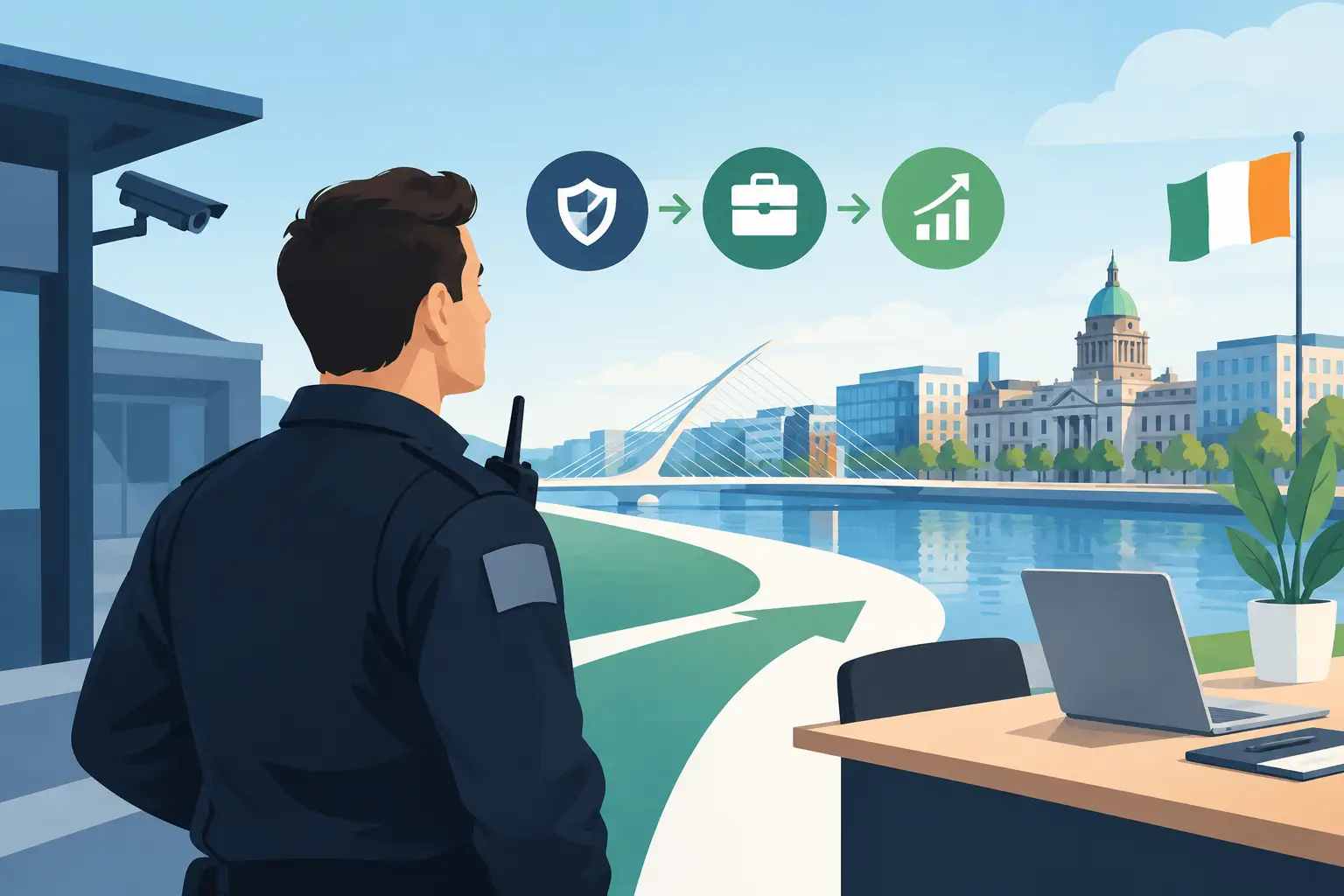
A career change into security is rarely about starting from zero. The skills that make someone reliable in retail, hospitality, construction, transport, customer service or the Armed Forces often transfer directly to licensed security work. This security career change guide explains how to choose a realistic route, meet the right licensing requirements and apply for roles where your experience counts.
Security work can offer varied hours, clear responsibility and progression into specialist roles. It also demands sound judgement, professional conduct and the ability to stay alert when a shift is quiet. Before training or applying, be clear about what the work actually involves and which part of the sector suits your circumstances.
Start with the right security career change route
Security is not one job. A static officer on a corporate reception desk, a door supervisor managing a busy venue and a mobile patrol officer covering several sites need different strengths. Choosing the right starting role will make your training, CV and job search far more focused.
For many people, security officer roles are the most direct entry point. Duties may include access control, visitor management, patrols, incident reporting, alarm response and monitoring site rules. This can suit people with strong customer service skills, a calm manner and experience of following procedures.
Door supervision may appeal if you are comfortable working evenings and weekends in licensed premises, events or entertainment venues. The work can be rewarding but it is not simply standing on a door. Employers need professionals who can communicate clearly, spot developing issues early and manage conflict proportionately.
Mobile patrol work can be a good fit for people who prefer independent work and hold a full driving licence. Shifts may involve opening and locking premises, conducting checks, responding to alarms and completing accurate reports. The driving element can widen your options, but it also brings responsibility for vehicle safety and punctuality.
If you have technical confidence, CCTV and control room roles offer another route. These positions require concentration, careful record keeping and an understanding of privacy, escalation procedures and evidence handling. Experience in administration, call handling or monitoring systems can be particularly relevant.
Specialist pathways such as close protection, cash-in-transit, corporate security and event security often require additional experience, qualifications or a proven employment record. They can be strong long-term goals, but an entry-level licensed role is often the best place to build the operational experience employers expect.
Licensing comes before most applications
In the Republic of Ireland, security work that requires a licence is regulated by the Private Security Authority. In Northern Ireland, the relevant licence is issued by the Security Industry Authority. The licence required depends on the duties you will carry out, so check the role description rather than assuming one licence covers every type of work.
A security employer will normally expect you to hold the appropriate current licence before starting in a regulated position. Some vacancies welcome licence-track candidates, particularly where an employer is open to hiring people who are completing approved training or awaiting the final stages of their application. Be honest about your status. Stating that you are licensed when you are still training will usually end the application early.
Training is a practical investment, not a box-ticking exercise. Choose an approved course that matches the licence and role you want. Ask what assessment is involved, whether identification or vetting documents are needed, and how long the application process may take. The fastest route is not always the best value if the course does not prepare you to work professionally on site.
If you already have a licence but have been out of the sector, check its validity and renewal position before applying. Employers need clear, accurate information. Include your licence type, number where appropriate, expiry date and any relevant additional qualifications on your profile and CV.
Turn your previous experience into security evidence
Career changers sometimes undersell themselves by writing a CV that only lists old job titles. A hiring manager needs to see the connection between your past responsibilities and the security role you want.
A retail supervisor may have dealt with theft prevention, difficult customers, cash procedures, opening and closing routines and staff safety. A hotel worker may have managed visitor access, handled complaints discreetly and responded to late-night incidents. A construction worker may understand site safety, contractor checks, perimeter awareness and working to strict rules. These are useful foundations when they are described clearly.
Use short, specific statements that show judgement and accountability. For example, rather than writing that you were good with people, explain that you handled customer complaints calmly, followed escalation procedures and recorded incidents accurately. Rather than saying you worked well under pressure, describe how you prioritised safety during a busy shift or responded to an unexpected issue without losing control of the task.
Your CV should also make practical availability easy to find. State your location, whether you can travel, your driving licence status if relevant, preferred work pattern and licence position. Security employers often recruit for fixed nights, weekends, relief cover or rotating rosters. A candidate who is qualified but unavailable for the shift pattern may not be suitable for that vacancy.
Prepare for vetting and professional standards
Security is a high-accountability profession. Employers may need to verify identity, work history, references, licence details and suitability for the site. This is not an administrative inconvenience. Thorough vetting protects clients, colleagues and the public, and it helps employers place staff with confidence.
Prepare a straightforward employment timeline before you apply. Account for periods of work, education, training, travel or unemployment honestly. Keep contact details for referees up to date and ensure your name and address details match across your documents where possible. Small inconsistencies can delay a process that might otherwise move quickly.
Professional presentation matters too, but it is broader than appearance. Recruiters look for candidates who can arrive on time, communicate professionally, write a usable incident report and respect confidentiality. Security officers may be the first person a visitor sees and the person trusted to act when something goes wrong. Reliability is part of the role, not an extra.
Search for jobs with the shift and site in mind
A role title alone cannot tell you whether a job is right. Read the work pattern, location, rate of pay, licence requirement and duties before applying. A full-time day role at a corporate site can feel very different from weekend event work or a night patrol rota, even when all three use the title security officer.
Search locally first if travel time affects your availability. Then consider whether you want a permanent contract, flexible work, relief shifts or a route into a particular setting such as retail, healthcare, logistics, construction or hospitality. New entrants sometimes take the first available role, which is understandable, but choosing a setting that suits your temperament can help you stay and progress.
Security Jobs Ireland allows candidates to search by role, location and work pattern, create a profile and apply directly to employers. Keep your profile current, especially after receiving a licence, completing a course or gaining new site experience. Direct applications work best when the information an employer needs is already clear.
Apply selectively rather than sending the same CV everywhere. A short supporting note should confirm your licence status, availability and relevant experience for that specific site or shift. If the role requires a driving licence, control room experience or weekend availability, address it directly. This saves time for both sides and shows that you have read the vacancy.
Build a career, not only a first job
Your first security role does not have to define your whole career. Treat it as a chance to build a record of dependable attendance, clear reporting, sound customer service and proper procedure. Those habits can lead to supervisory duties, control room work, mobile patrol, training, operations support or more specialised posts.
Ask for feedback once you have settled into a role. Find out what additional licences, site training or practical experience would make you eligible for the next step. Progress may be quicker in a growing security company, while a large contract can offer exposure to more formal systems and varied sites. The better option depends on the type of experience you want to gain.
A successful move into security starts with accurate information and realistic expectations. Choose a role you can commit to, keep your licence and documents in order, and let your application show the calm, dependable professional an employer can trust on site.