
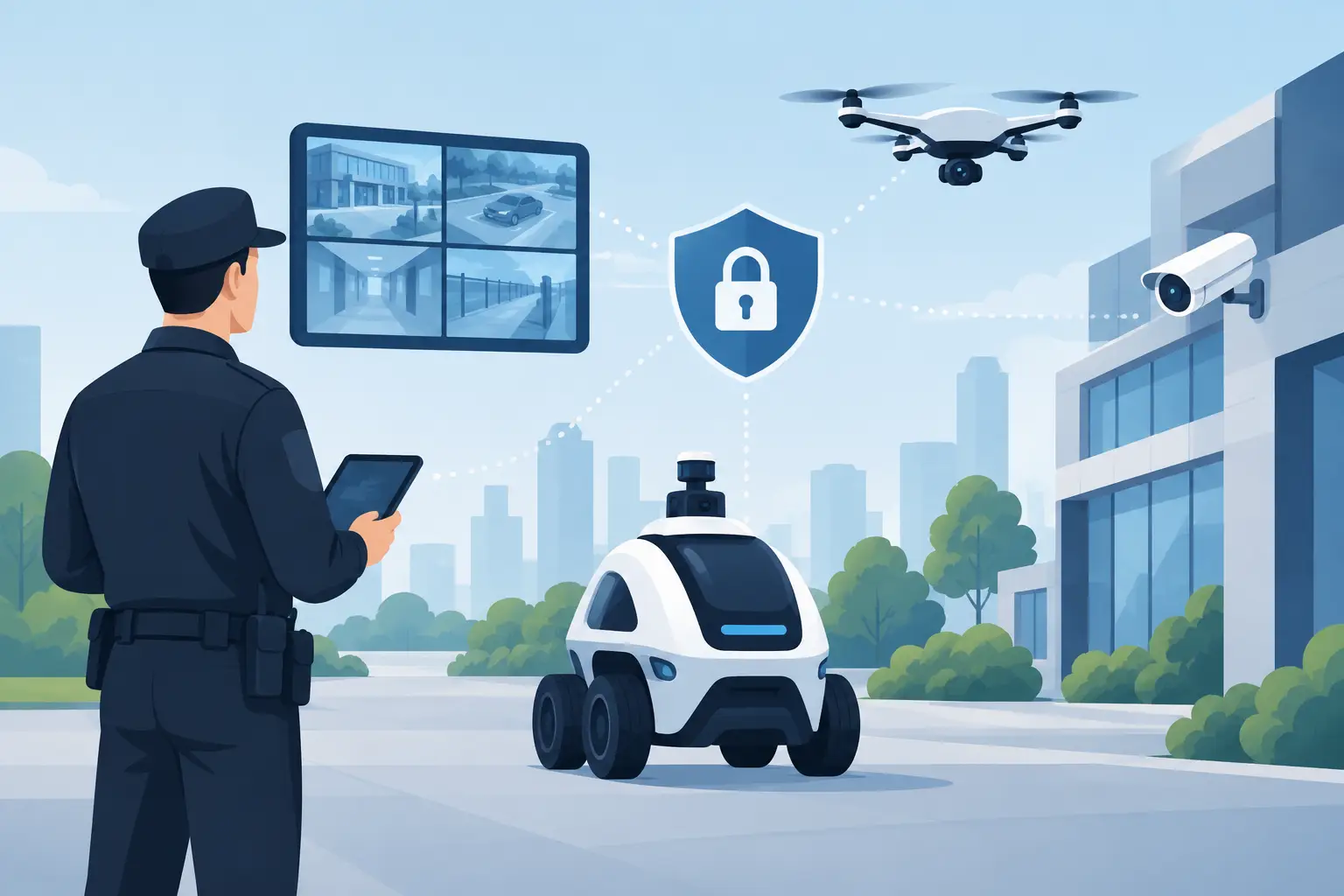
A single security officer cannot watch every camera feed, check every access point and respond to every alarm at once. Security automation gives teams a better way to prioritise what needs attention, while keeping professional judgement and a visible security presence where they matter most.
For employers, the aim is not simply to reduce headcount. Done properly, automation can improve response times, reduce repetitive administration and help officers focus on incidents, customer service, patrols and site safety. For security professionals, it is changing the skills employers look for – particularly in CCTV, access control, reporting and control-room work.
What security automation means on a working site
Security automation uses connected systems and pre-set rules to complete, flag or escalate routine security tasks. In physical security, that may mean an access-control system automatically denying entry to an expired pass, CCTV analytics highlighting unusual movement, or a control room receiving an alert when a lone worker misses a check-in.
The system handles the first action. A trained person still assesses the situation, follows site procedures and decides whether to investigate, contact emergency services or escalate to a client representative.
This distinction matters. An alert is not an incident, and a camera classification is not evidence on its own. In a retail setting, for example, an analytics alert may identify a person remaining in a restricted stock area. An officer must establish whether they are a member of staff, contractor or unauthorised visitor before acting. Technology can shorten the time to attention; it cannot replace proportionate decision-making.
Where automation supports security officers
The best uses are usually the repetitive, time-sensitive tasks that create too much noise for a busy team. Automated visitor passes can notify hosts when guests arrive and expire at the end of the visit. Digital patrol systems can confirm that required checkpoints have been completed and flag missed patrols. Alarm platforms can send the right type of notification to the right team rather than leaving staff to work through a long, generic alarm queue.
CCTV is one of the clearest examples. Video analytics can identify line crossing, crowding, object removal or vehicle movement in defined zones. This helps a CCTV operator focus on live exceptions instead of staring at multiple screens for hours. It is particularly useful on large industrial sites, logistics yards, construction projects and transport locations where perimeter coverage is extensive.
Access control can also improve day-to-day site management. Rules can be set around staff permissions, delivery times, restricted areas and emergency lockdown procedures. However, access systems must be kept current. A perfectly configured system still creates a risk if leavers retain active credentials, contractor records are incomplete or staff routinely hold doors open for others.
Automation does not remove the need for licensed staff
A visible officer can reassure staff and visitors, de-escalate conflict, spot context that a system misses and make decisions under pressure. These are not secondary functions. In many environments, they are the reason a client employs security in the first place.
Security automation changes how officers spend their time. A mobile patrol officer may receive a verified alarm with camera footage before travelling to site. A concierge security officer may use a visitor management system while still providing a professional welcome and challenging unfamiliar individuals. A control-room operator may manage more meaningful alerts, but must remain able to interpret footage, maintain accurate logs and coordinate a response.
For roles in the Republic of Ireland, PSA licensing requirements remain central. In Northern Ireland, employers will generally expect the relevant SIA licence for the activity being carried out. Technology experience is valuable, but it does not replace licensing, vetting, site induction or the legal and procedural responsibilities attached to a role.
Employers should be clear about this in vacancy descriptions. If a role involves access-control administration, remote monitoring, CCTV review or incident-reporting software, say so. Candidates can then understand whether they need existing experience, product training or a willingness to learn.
The skills security employers are starting to value
Many frontline roles now sit alongside digital systems, even where the job title remains security officer or door supervisor. Candidates do not need to be software engineers. They do need to be comfortable using technology accurately, following workflows and recognising when an automated result needs human review.
The most useful skills include:
- operating CCTV and access-control platforms in line with site procedures;
- writing clear digital incident reports with accurate times, locations and actions taken;
- understanding alarm escalation, call-out and evidence-handling processes;
- communicating calmly with colleagues, clients, emergency services and members of the public; and
- protecting confidential information, including footage, access records and visitor data.
For candidates building a CV, practical detail is stronger than a broad claim such as “computer literate”. Mention control-room systems used, the type of site covered, patrol-reporting tools, access-control responsibilities and any relevant training. A retail security officer who monitored body-worn camera procedures and completed digital reports has relevant experience for more than one role.
For those entering the sector, start with the licence and training required for your intended path, then look for opportunities where a reputable employer provides system-specific induction. The equipment will vary between sites. The habits of accurate reporting, situational awareness and following escalation procedures transfer well.
Introduce security automation without creating new risks
Automation can create a false sense of certainty when it is introduced without clear ownership. A missed alert, poorly positioned camera or overly sensitive detection rule can quickly undermine confidence in the system. The practical question is not “Can this be automated?” It is “What risk will this reduce, and who is accountable when the system flags, fails or is bypassed?”
Start with a defined operational problem. A site with repeated unauthorised vehicle access may benefit from automated number-plate alerts. A corporate office with slow visitor check-in may benefit from pre-registration and pass expiry. A hospital may need carefully designed duress alarms and escalation routes. Each setting has different safety, privacy and response requirements.
Before launch, test the process during real operating conditions. Check how alerts reach officers, how quickly someone can verify them and what happens outside normal hours. Make sure procedures cover power loss, network outages, false alarms, manual overrides and emergency access. If staff do not know what to do when automation stops working, the site is not prepared.
Data protection also needs attention. CCTV footage, visitor details, access logs and vehicle records may be personal data. Employers need a lawful purpose, sensible retention periods, restricted access and clear staff guidance. Officers should never share footage or incident information informally through personal devices or messaging groups.
Better job briefs lead to better security hires
When employers hire for an automated environment, vague job adverts attract vague applications. Set out the licence required, work pattern, location, rate of pay where possible, whether the role is static or mobile, and the systems the successful candidate will use. Explain whether training is provided and whether a driving licence, control-room experience or CCTV background is essential.
This benefits candidates as well as hiring managers. A professional can judge whether the work matches their licence, travel arrangements and career plans before applying. It also reduces the time employers spend filtering applicants who are not available for the shift pattern or do not meet site requirements.
Security Jobs Ireland helps employers reach a focused audience of licensed and licence-track professionals, without the agency commission model. For candidates, detailed profiles that include licence information, availability and relevant systems experience make direct applications more credible.
Keep people at the centre of the system
The strongest security operation combines reliable technology with properly trained, properly briefed people. Automation should reduce avoidable delays and routine workload, not leave officers isolated with unclear alerts or unrealistic expectations.
As more sites introduce smart cameras, digital patrols and automated access, security professionals who can use these tools with sound judgement will stand out. The value is not in pressing a button. It is in knowing what the alert means, what to do next and when a human response makes all the difference.