A control room needs an operator who can stay alert through a quiet night shift. A retail site needs a door supervisor who can de-escalate pressure at 5pm on a Saturday. No automated tool can confirm those qualities on its own. AI security hiring can help employers handle applications faster, but it must support professional judgement, licence checks and proper conversations with candidates.
For security employers across Ireland and Northern Ireland, speed matters. A site cannot be left uncovered while a manager works through unsuitable CVs. At the same time, hiring the wrong person can affect client confidence, staff safety, compliance and the reputation of the security provider. The sensible question is not whether AI should be used. It is where it can save time without weakening the standards that make security recruitment dependable.
Where AI can help security recruitment
AI tools are most useful when they deal with repetitive administrative work. They can help organise applications by location, availability, licence type, driving status or experience in a particular setting. For a company recruiting for several shifts across Dublin, Cork, Belfast or regional sites, that can reduce the time spent identifying candidates who meet the basic requirements.
It can also help employers prepare clearer vacancy descriptions. A good security job advert should state the role, site type, shift pattern, location, pay where possible, licence requirement and any essential conditions such as a full driving licence. AI can turn operational notes into a structured first draft, helping hiring managers avoid vague adverts that generate irrelevant applications.
For candidates, technology can make job searching more practical. Relevant role alerts, better matching by postcode or city, and prompts to complete a profile can help licensed professionals find suitable work sooner. That is particularly useful for officers balancing existing shift commitments, or people who are licence-track and looking for a realistic first opportunity.
Used well, AI should shorten the route from vacancy to conversation. It should not become a barrier between a capable professional and an employer.
AI security hiring still needs human checks
A security licence is not simply another keyword on a CV. Employers need to verify that the candidate holds the appropriate current PSA or SIA licence for the work offered, and that the licence details are valid. A tool may identify a claimed qualification, but it cannot replace the employer’s responsibility to check it properly.
The same applies to vetting, identity, right-to-work checks, references and role-specific suitability. A candidate who has worked in hospitality security may have valuable experience, but a hospital, corporate reception or mobile patrol post can require a different approach. Human review is needed to understand the context behind a work history rather than making assumptions from job titles alone.
Interviewing also remains essential. Security work relies on communication, observation, reliability and sound decision-making. An applicant may appear strong on paper but be unable to explain how they would report an incident, manage conflict or follow escalation procedures. Equally, a candidate with a concise CV may bring years of steady, relevant experience that automated screening fails to recognise.
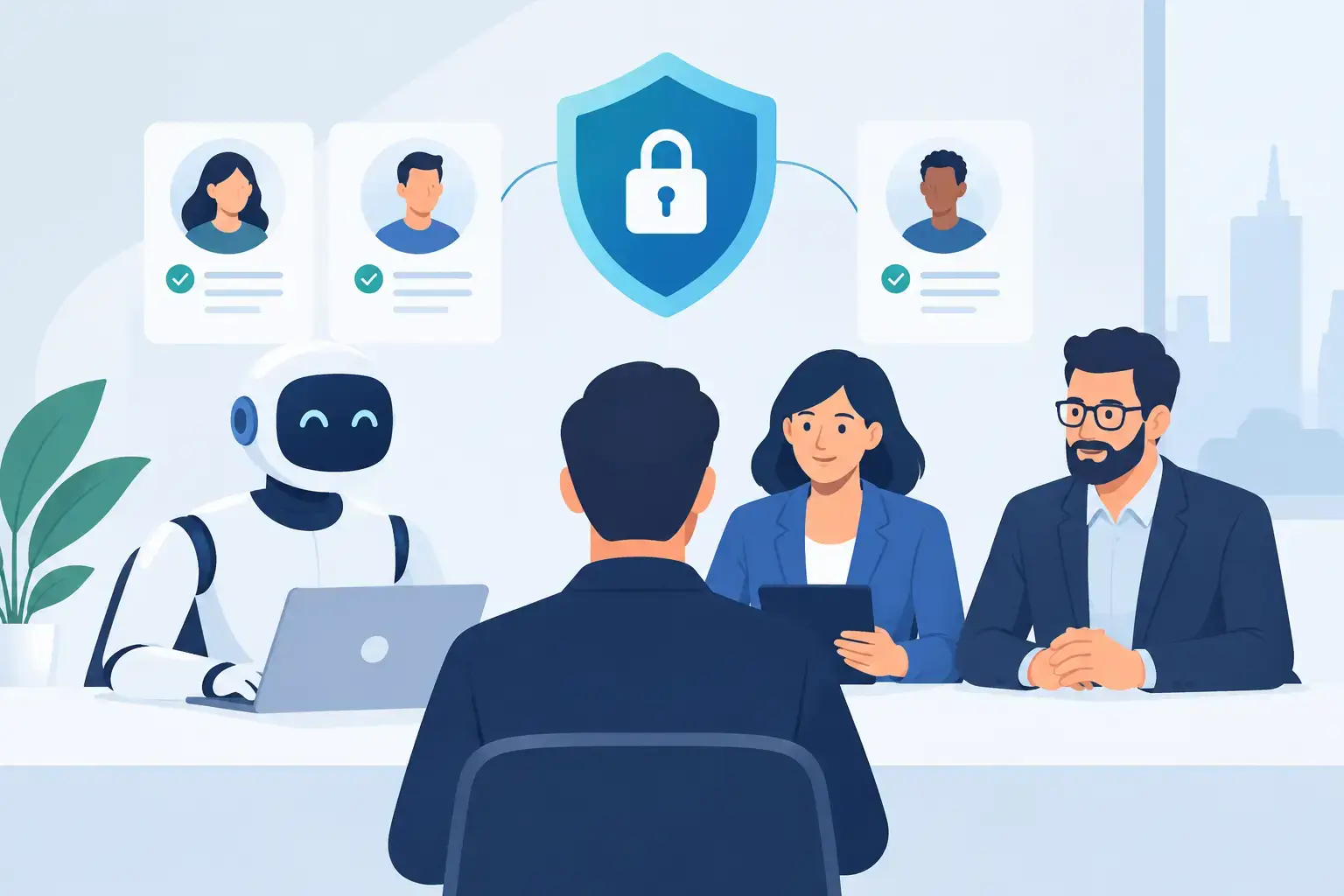
The strongest approach is straightforward: let software sort information, then let an experienced manager make the hiring decision.
The risks of over-automating selection
The quickest process is not always the best process. If an automated filter is set too narrowly, it may exclude candidates who use different wording for the same role. “Security officer”, “static guard”, “site security” and “corporate security” can describe overlapping experience. A capable officer returning after a career break may also be missed if the system gives too much weight to uninterrupted employment dates.
There is also a fairness issue. AI systems learn patterns from data and may reproduce poor historic hiring habits. If past recruitment favoured one background, location or style of CV, an automated model can amplify that preference. This is a particular concern in a sector that needs to attract dependable people from a wide range of communities and employment backgrounds.
Candidates deserve clarity too. They should know what information is required, why it is being collected and how it will be used. Security employers handle personal details that must be treated with care. Uploading CVs, licence information and vetting-related documents into unapproved tools can create unnecessary data protection risks.
AI-generated messages need oversight. An inaccurate rejection email, a confusing request for documents or an incorrect statement about licence eligibility can damage trust quickly. A named contact and a clear next step remain far more useful than a generic automated response.
Build a process that protects standards
Before introducing AI into hiring, employers should map the recruitment journey from vacancy approval to first shift. Identify the steps that are administrative, and separate them from decisions that require accountability. Shortlisting can be assisted by technology. Licence validation, suitability decisions, interview assessment and final sign-off should remain under human control.
A practical process should include four safeguards:
- Set clear, job-related screening criteria before applications arrive, including licence type, location, shift availability and essential experience.
- Review a sample of rejected applications regularly to check that suitable people are not being filtered out unfairly.
- Keep candidate information within approved recruitment systems and limit access to those who genuinely need it.
- Give applicants a straightforward way to ask a question, correct information or request feedback where appropriate.
These controls do not have to slow hiring down. In fact, they reduce the wasted time that comes from correcting errors later, replacing unsuitable staff or responding to complaints. For employers managing high-volume recruitment, consistency is a commercial advantage as well as a compliance measure.
What candidates should expect from an AI-assisted process
Candidates should not need technical knowledge to apply for a security role. They should expect a clear advert, a direct application route and an explanation of the essential requirements. If a PSA or SIA licence is required, it should be stated plainly. If a role is open to people completing approved training or working towards their licence, that should be equally clear.
A complete profile helps both the applicant and the employer. List the licence held, renewal date where relevant, preferred locations, shift availability, driving status and the environments you have worked in. Be specific about duties: access control, patrols, CCTV monitoring, incident reporting, front-of-house security, event work or team supervision all demonstrate different strengths.
Do not try to write your CV for an algorithm alone. Plain, accurate language is better than filling it with repeated keywords. A hiring manager should be able to understand your experience quickly, and your details should stand up to checks. If you are changing security disciplines, explain why your skills transfer rather than assuming the employer will make the connection.
Better hiring starts with better vacancy information
AI cannot repair a poorly defined role. Employers should decide what the site genuinely needs before posting. Is this a lone-working mobile patrol role, a customer-facing corporate position, a busy retail assignment or an event-based shift? What training, licence category, communication skills and availability are essential? Which requirements are desirable but can be developed after appointment?
That distinction matters in a tight labour market. Insisting on every possible qualification may reduce the candidate pool unnecessarily. For some positions, a reliable licensed officer with the right attitude can be trained in the site’s systems. For others, such as specialist control-room work or close protection, previous experience may be non-negotiable. The right balance depends on the risk profile of the assignment.
Pay and work pattern should be transparent wherever possible. Candidates are more likely to apply when they can see whether a post is full-time, part-time, nights, weekends, relief work or a fixed contract. Clear information produces more relevant applications and makes the first conversation more productive.
Keep the relationship direct
The security sector is built on trust. Clients trust providers to place suitable people on site, and officers trust employers to offer legitimate work with clear expectations. AI can improve the speed of matching, but direct contact is what confirms whether a role and a candidate are right for each other.
Security Jobs Ireland is designed around that direct connection: employers can reach security-focused candidates, while professionals can search roles that recognise licences, locations and real working patterns. Technology should make that connection easier, not make recruitment feel anonymous.
The next time a vacancy needs filling quickly, use AI to remove repetitive admin, then give the final stage the attention it deserves. A short, informed conversation may be the difference between simply filling a shift and appointing someone who strengthens the whole operation.